 Business License

How to Choose Coke for the Blast Furnace: The Criteria That Actually Move Your Coke Rate
Coke is the one input a blast furnace cannot do without. Coal injection can replace much of its heat and reducing duty; scrap and direct reduction can cut the iron burden. But nothing yet replaces coke's two non-substitutable jobs — supporting the burden column and keeping liquid slag and iron draining through the hearth. That is why coke quality remains the single largest raw-material lever on furnace stability, and why choosing it deserves a specification, not a price list.
1. What coke is actually being asked to do
Six functions, in the order they matter to the operator:
Structural support of the entire burden column = skeleton
Reductant — generates CO for indirect reduction of iron oxide
Heat source, burned in the raceway in front of the tuyeres
Carburizer for the hot metal as it drips to the hearth
Regulator of gas flow distribution across the furnace
Drainage / permeability — keeps slag and iron moving through the coke bed
Only the first and last cannot be replaced by pulverized coal injection. Everything else can be partly displaced — which explains why, at high injection rates, the quality bar on strength and size actually goes up, not down. Published Chinese operating data put coke quality's influence on furnace performance at around 35% under high-intensity, high-PCI conditions.
2. The rule that drives every other spec: bigger furnace, harder coke
The taller the furnace, the greater the mechanical load and the longer the residence time, so the coke must survive more crushing and more CO₂ attack. Recommended minimums for Chinese blast furnaces rise steadily with useful volume:
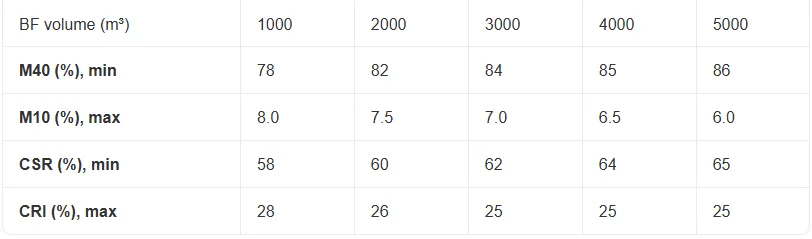
M40 and M10 are cold strength (measured in a Micum drum): M40 is the share still above 40 mm — resistance to crushing; M10 is the share falling below 10 mm — resistance to abrasion. CRI and CSR are hot strength: the coke is reacted with CO₂ at 1,100 °C for two hours, and CSR is the fraction still above 10 mm after a subsequent tumble test. Cold strength governs the upper shaft; hot strength governs the cohesive zone and below — and it is the hot strength that gets harder to satisfy as the furnace grows.
3. The six numbers to write into your specification
① Fixed carbon. The carbon you are buying. Remember it is a calculated value (100% minus moisture, ash, volatiles and sulfur), not a measured total.
② Ash. Inert material that becomes slag and consumes heat. Every +1% of ash raises coke rate by 5–7 kg per tonne of hot metal and cuts output by 2–3%. Chinese BF cokes typically run around 12.5% ash; European practice is roughly three points lower, which is why fuel-rate comparisons across regions must be adjusted before they mean anything.
③ Sulfur. Sulfur affects the whole furnace circuit — roughly 80% of the sulfur load comes from coke and injected coal. Every +0.1% sulfur raises coke rate by 3.5–6 kg/t; published studies put the penalty for higher-sulfur coke at 1.2–2.0% more flux and coke consumption and about a 2% loss of productivity. Low-sulfur coke is not a nicety — it is a direct cost line.
④ CRI / CSR. The hot-strength pair. Every +1% in CRI adds about 0.75 kg/t to the fuel rate, while every +1% in CSR cuts roughly 0.54 kg/t. Typical industry targets are CRI ≤ 30% and CSR ≥ 55%, tightening to CRI ≤ 25% and CSR ≥ 65% for large furnaces. For reference, Baosteel's published target at very high injection rates was CSR ≥ 66%, CRI ≤ 26%, ash ≤ 11.5%, sulfur ≤ 0.55%.
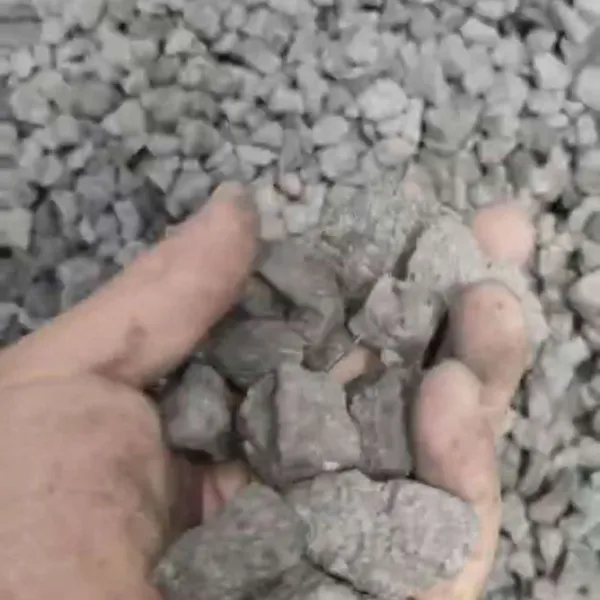
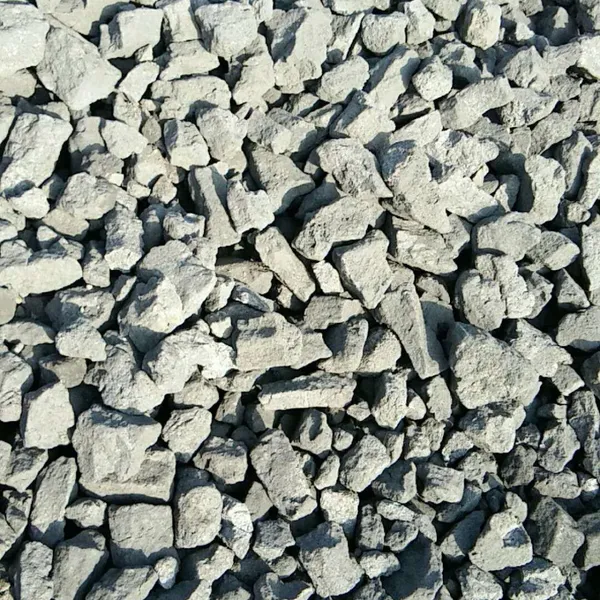
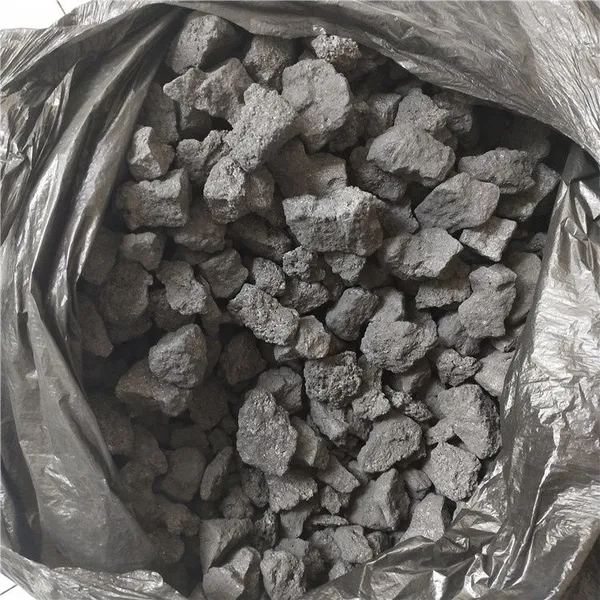
⑤ Size distribution. Working range is broadly 40–50 mm. European coke standards target 40–80 mm above 72%, with below 40 mm under 18% and above 80 mm under 10%. Oversize coke is not a bonus — at high levels it increases wall gas flow and thermal load, and the mechanical strength of large pieces is often lower.
⑥ Moisture. Not a quality criterion in the same sense, but a control variable: every point of moisture is heat you pay for, and it disturbs the charge calculation.
4. Why size and strength degrade — and why you should care before buying
Coke does not arrive at the hearth as it entered. Dissection data show coke particle size falling by roughly 20% at the belly, 40% at the bosh, and 55% in the raceway, with reactivity roughly doubling along the way. Small coke concentrates near the hearth wall, where slag and iron collect — the classic path to hearth accumulation, rising sidewall temperature and, in the worst case, a burned-through hearth. That is why operators reach for better coke the moment sidewall temperatures drift up, and why thin, uniform, strong coke pays for itself downstream.
5. Two specification frameworks to be aware of
GB/T 1996-2017 (Metallurgical Coke) sets graded requirements. In the current edition, first-grade coke requires M40 ≥ 92.0%, M10 ≤ 7.0% and CSR ≥ 60% — note that the CSR bar for the top grade was raised from 55% in the 2003 edition, a clear signal of where the market has moved. The standard's paired test method is GB/T 4000-2017 for CRI and CSR.
Dalian Commodity Exchange delivery standard (F/DCE J003-2024) is the practical benchmark for traded coke in China: ash 13.0%, sulfur 0.70%, M40 ≥ 80%, M10 ≤ 7.5%, CRI in (25%, 30%], CSR in [60%, 65%), volatiles ≤ 1.7%.
If you are buying to a price list rather than a specification, these are the numbers to anchor on — and the ones to insist appear on the certificate of analysis.
6. What to put in the purchase contract
At minimum, specify: fixed carbon (min); ash (max); sulfur (max); M40 (min); M10 (max); CRI (max) and CSR (min); size distribution with both the plus and minus cut-offs; moisture; and the test standards used. Require a third-party certificate of analysis per lot, check that the sampling and test methods are the current editions, and run a trial heat before committing to a bulk order.
Frequently Asked Questions
Can I cut coke quality if I inject more pulverized coal?
No. Higher injection rates mean longer coke residence time and a higher ore-to-coke ratio, so the coke works harder, not less. The published trend is the opposite: quality requirements tighten as PCI rises.
Is high CSR always worth the price?
CSR is worth paying for where hot strength is needed — particularly large furnaces and wherever hearth sidewall temperature is a concern. But CSR alone is not a specification: a coke with excellent CSR and 15% ash will still cost you coke rate.
How much does ash really matter compared with sulfur?
Both are first-order. A useful rule of thumb: +1% ash ≈ +5–7 kg/t coke rate and −2 to −3% output; +0.1% sulfur ≈ +3.5–6 kg/t coke rate. Read them together with CRI/CSR and size, not in isolation.
What is the single most reliable way to compare two coke offers?
Convert both to cost per tonne of hot metal — including the effects of ash on slag rate, sulfur on desulfurization and productivity, and CSR on fuel rate — rather than comparing price per tonne of coke.
The takeaway: coke specification is a system, not a number. Match strength and size to furnace volume, hold ash and sulfur down to control coke rate, and check CRI/CSR against the current test standards. Buy on a certificate of analysis and a trial heat — the cheapest coke per tonne is rarely the cheapest coke per tonne of iron.
#BlastFurnace #MetallurgicalCoke #CokeQuality #Ironmaking #Steelmaking #CSR #CRI #CokeRate #PCI #FoundryCoke #Metallurgy #SteelIndustry #RawMaterials
Recently Posted
-
How to Choose the Right Carbon Raiser: A Practical Guide for Foundries and Steelmakers
October 29, 2026Every foundry uses carbon raisers. Far fewer use the right one. The choice affects carbon recovery, sulfur and nitrogen pickup, s Read More
-
4 Sourcing Red Flags When Buying Semi Coke Internationally (And How to Avoid Them)
October 21, 2026IntroductionGlobal trade in semi coke has grown rapidly, driven by demand from smelters in Asia, Europe, and the Middle East. Howe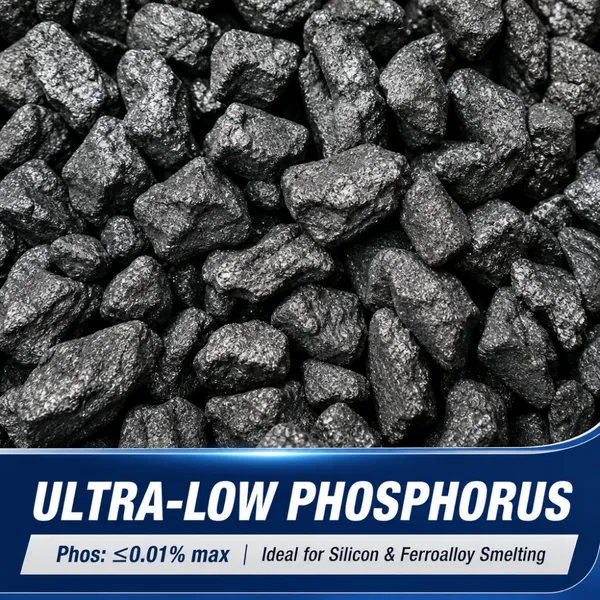 Read More
-
Primary Industrial Applications and Uses of Semi Coke
October 20, 2026IntroductionElectrical power represents up to 40% of the total production cost in ferrosilicon (FeSi) and calcium carbide (CaC₂) p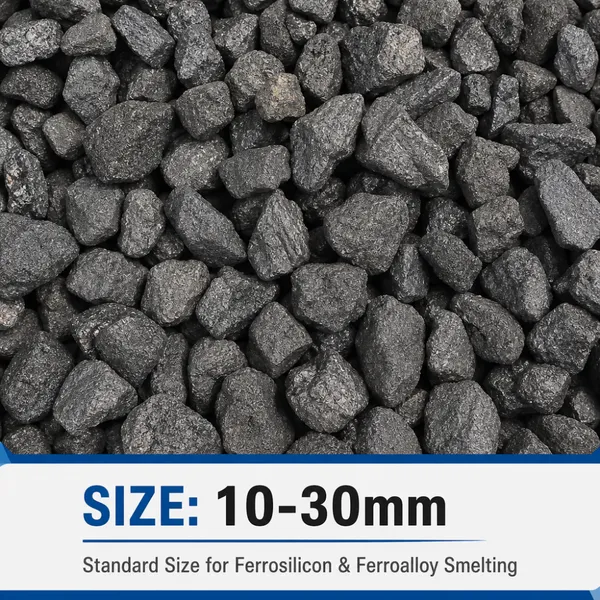 Read More
-
What is Semi Coke? Definition, Production Process, and Core Properties
October 16, 2026The Science of Semi Coke: How Low-Temperature Carbonization Creates a Superior Smelting CarbonIntroductionIn the global drive towa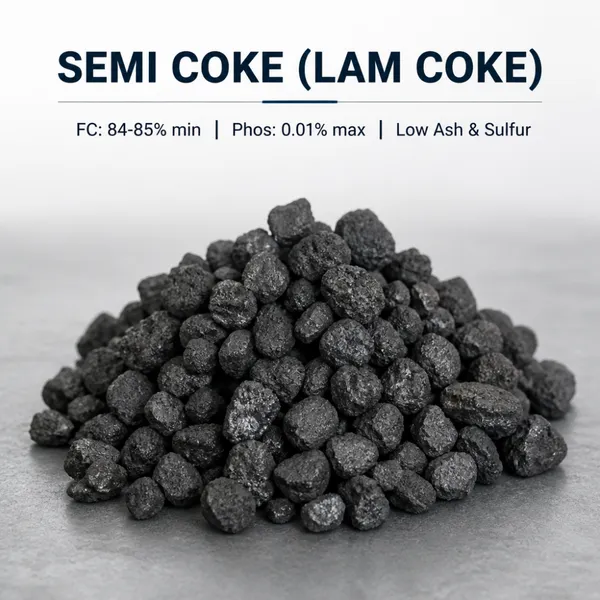 Read More

Contact Us
Recommended Products
-
 Fixed Carbon 98.5% Carbon Anode Scrap Carbon ButtsUS$ 450MOQ: 20 Metric Tons
-
Low Phos Iinstead of Metallurgical Coke 10-30mm Semi Coke for Ferro AlloysUS$ 160MOQ: 20 Metric Tons
-
Low Sulfur Calcined Anthracite Coal Carbon Raiser FC90% 93% 95%US$ 250MOQ: 20 Metric Tons
-
High Strength Foundry Coke 80-150mm for Pig Iron Casting and CupolaUS$ 350MOQ: 20 Metric Tons
-
10-30mm Low Ash Metallurgical Coke for Steel Mills and Ferro AlloysUS$ 220MOQ: 20 Metric Tons
-
Premium Low Sulfur Foundry Coke for Ductile Iron Casting Operation Project Work UseNegotiableMOQ: 17 Metric Tons
-
Low Sulfur Carbon Raiser FC90% 95%US$ 250MOQ: 20 Metric Tons
-
Low Phos 10-30mm Semi Coke for Ferro Alloys Iinstead of Metallurgical CokeUS$ 160MOQ: 20 Metric Tons
-
25-40mm Low Ash Metallurgical Coke CSR 65+ for Steel MillsUS$ 220MOQ: 20 Metric Tons
-
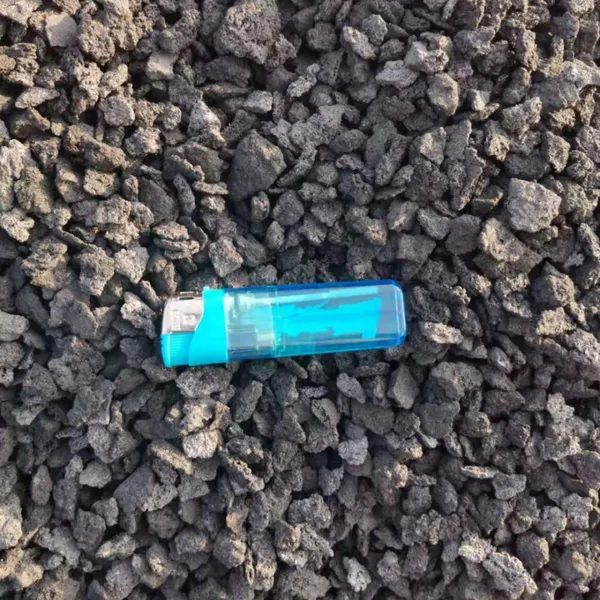
High Carbon Low Sulfur Low Ash Met Coke Nut CokeUS$ 220MOQ: 20 Metric Tons
-
Metallurgical Nut Coke 10-30mm High CSR Low Sulfur for Blast FurnaceUS$ 240MOQ: 20 Metric Tons
-
88% Fixed Carbon Foundry Coke 80-120mm for Cupola FurnaceUS$ 350MOQ: 20 Metric Tons
-
High Strength Foundry Coke 80-150mm for Pig Iron Casting and CupolaUS$ 350MOQ: 20 Metric Tons
-
Carbon 88% Sulfur 0.035% Ash 10% Phosphorus 0.035% Calory 7100J for Pig Iron Hard Coke Casting Coke Foundry CokeUS$ 350MOQ: 20 Metric Tons
-
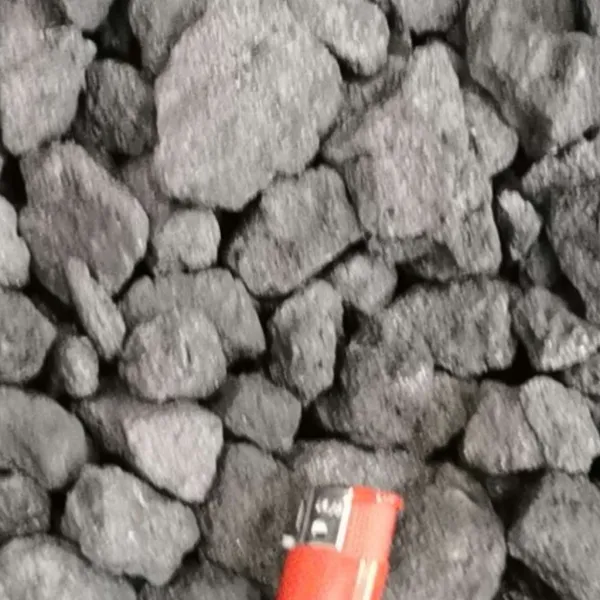
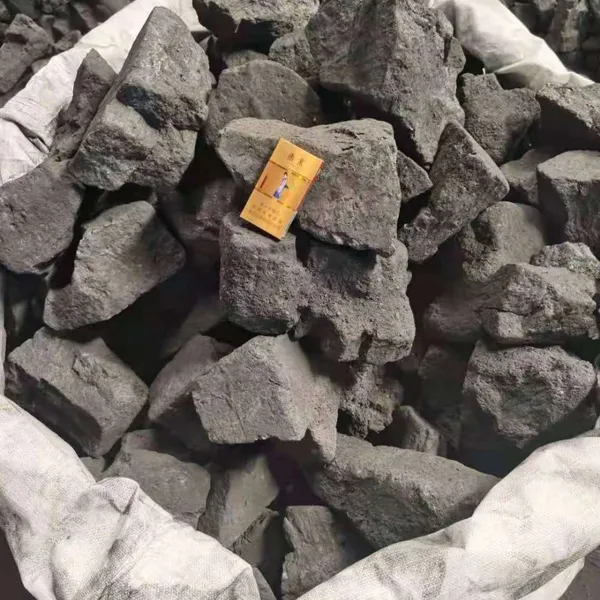
Fixed Carbon 88% Foundry Coke 80-150mmUS$ 350MOQ: 20 Metric Tons

-
Low Ash Good Price Metallurgical Coke Nut Blast Furnace Coke for SaleUS$ 240MOQ: 20 Metric Tons
-
Low Ash Metallurgical Coke 10-30mm Nut Coke 20-40mmUS$ 240MOQ: 20 Metric Tons
-
High Carbon Low Sulfur Low Ash Met Coke Nut CokeUS$ 220MOQ: 20 Metric Tons
-
Low Ash Metallurgical CokeUS$ 240MOQ: 20 Metric Tons
-
High Carbon Low Sulfur Met Coke Nut CokeUS$ 220MOQ: 20 Metric Tons